This might seem like a no-brainer. Maybe you’ve heard it all before. Bear with me. Cars consume fossil fuels and produce pollution. So don’t use them, right? Well, easier said than done! Not that things worth doing are usually easy… Maybe you don’t even have a car! Well, don’t worry. In this post I’ll try to cover how you should drive, if you have to, and how to get around without a car, if you don’t!
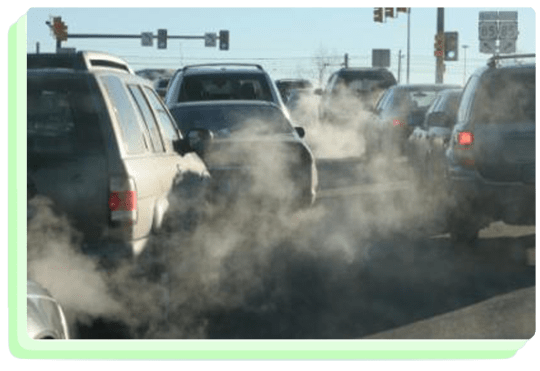
How to get around with a car:
1. Carpool/Ride share
So, let’s say you do need to go somewhere in a car. Maybe you’re in a rush, maybe it’s all the way across town/the state/the country, and there’s no good public transport access. Whatever the reason, you need to go by car. If that’s the case, then consider doing a carpool. See if anyone needs to go in the same direction as you, and then take them along. Or, if you don’t have a car, see if they’ll take you along. If you have to go somewhere on a daily/regular basis, like work or school, see if there are a few people with the same shift/classes and go all together. If more than one of you has a car, you can take turns being the driver so its not always the same person who has to leave early to pick up the others.
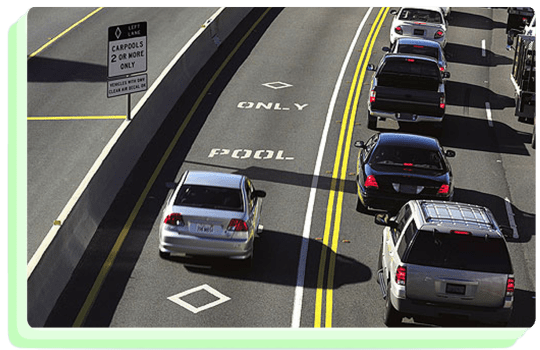 Plus, you get to drive in the (usually) less-cramped HOV lane!
Furthermore, many Universities offer ride-share programs. When I was studying at NAU there was a board outside the cafeteria where people could post when and where they were/needed to go somewhere. This helped students get in to contact with each other, whereas they might otherwise never have met.
Long story short, if you’re driving somewhere, try to get as many people in your car as you can. Split the carbon cost and, hey, maybe the gas money, too!
Here are a few sites where you can look for carpool groups near you (I cannot personally vouch for them, however):
– Ridejoy
2. Drive efficiently (hypermiling)
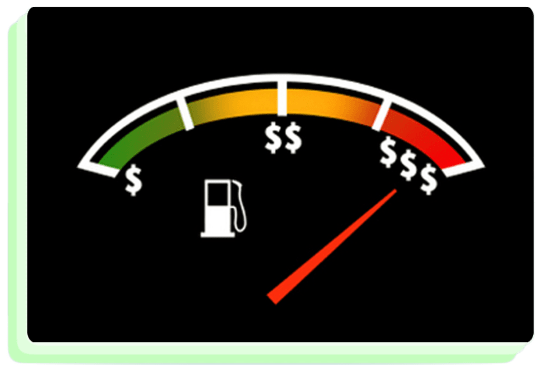
There are a few things to be said for this tip. The less fuel you use, the better- for your wallet and the environment. A few ways to increase your miles per gallon include:
-Don’t be a leadfoot. This is the essence of ‘hypermiling’, in its most basic form (2). Use the gas pedal (and the brake) as little as possible. Every time you use the gas pedal you are consuming fuel and, by the same logic, you are throwing that fuel away every time you use the brake. Coast as much as possible; don’t ‘jack rabbit’ start off the line when the light turns green, and don’t screech to a stop when it turns red. Be aware of your surroundings, and drive accordingly. For a full description of what hypermiling is, check out this article here: Hypermiling: Driving Tricks Stretch Miles Per Gallon.
– Slow down. This is another no-brainer. I know we usually want to get where we’re going as quickly as possible, but Speeding Doesn’t Get You There Faster. The faster you go, the more fuel it takes to keep you going that fast- and the more fuel you’ll have to spend to get back up to that speed, if you have to slow down or stop. It’s a speed limit, not a speed requirement, after all. Besides, it’s not just safe, it’s smart: once you drive faster than 55mph, your fuel efficiency drops up to 15% (1).
 In other words.
3. Use low grade fuel
Lower octane fuel requires less fossil fuel to produce (1). It’s true, higher octane fuel helps reduce engine knock- if your engine was made before the 1980’s (4). If your care is newer than that, it’s probably designed to run on fuel with an octane rating of 87. You can find out by checking your car’s owner manual. Some higher performance engines do need higher octane fuel, but using fuel with too high an octane rating otherwise can damage a car’s emission systems. If you can afford such a high performance car, you can afford an ‘eco’, hybrid type car, instead.
4. Don’t idle
Don’t idle, or idle as little as possible. Idling for 20 seconds burns more gas (and emits more carbon dioxide, or CO2) than simply turning the car off and back on again 20 seconds later (1). If you’re at a long stop- at a train crossing, for instance -consider turning off the car. Furthermore, turn off your engine when parked. I know it might be tempting, if you have to wait while parked somewhere, to crank up the A/C or radio, but consider parking in the shade and opening the car door instead, and bringing an MP3 player. Or a book. Ix-nay on the idling.
5. Don’t make special trips for gas
We’ll finish with another no-brainer, here. Just as it says- don’t make a special trip just go get gas. Then you’re just spending gas… to get more gas. Try to work filling up in to the rest of your schedule- tank on the way to or from work, school, or the supermarket, from example.
6. Bring a bike
If you’re heading in to town/school/somewhere you plan on maybe doing a lot of different errands in a small area, but far from home- bring a bike. Or, if it’s going to be a regular occurrence (like driving in to town for work or school), invest in a good lock and leave your bike somewhere you can easily access it when you need it. When I went to university, the campus was very long and thin- and I often had a class on the south end right after a class on the north end, and only 15 minutes to get from one to the other. It make little sense to pay for parking permits for multiple different lots- that would be expensive, obviously not environmentally friendly, and possibly still make me late since traffic was always congested on campus. So, I got a permit for the lot in the middle of campus and locked up my bike outside, or took it home in the car when I knew I’d need it closer to home. Naturally, you can also bring a skateboard, roller skates, unicycle, or scooter, as you prefer.
Coming up… Don’t Drive (Alone) – Part 2
In the next installment, I’ll discuss how to get around without a car! Stay tuned.

 Green Start