In this installment of Don’t Drive (Alone), we’ll look at how to get around (greenly) without a car. Expect some more fairly intuitive advice, here, folks!
How to get around without a car:
1. Public Transport
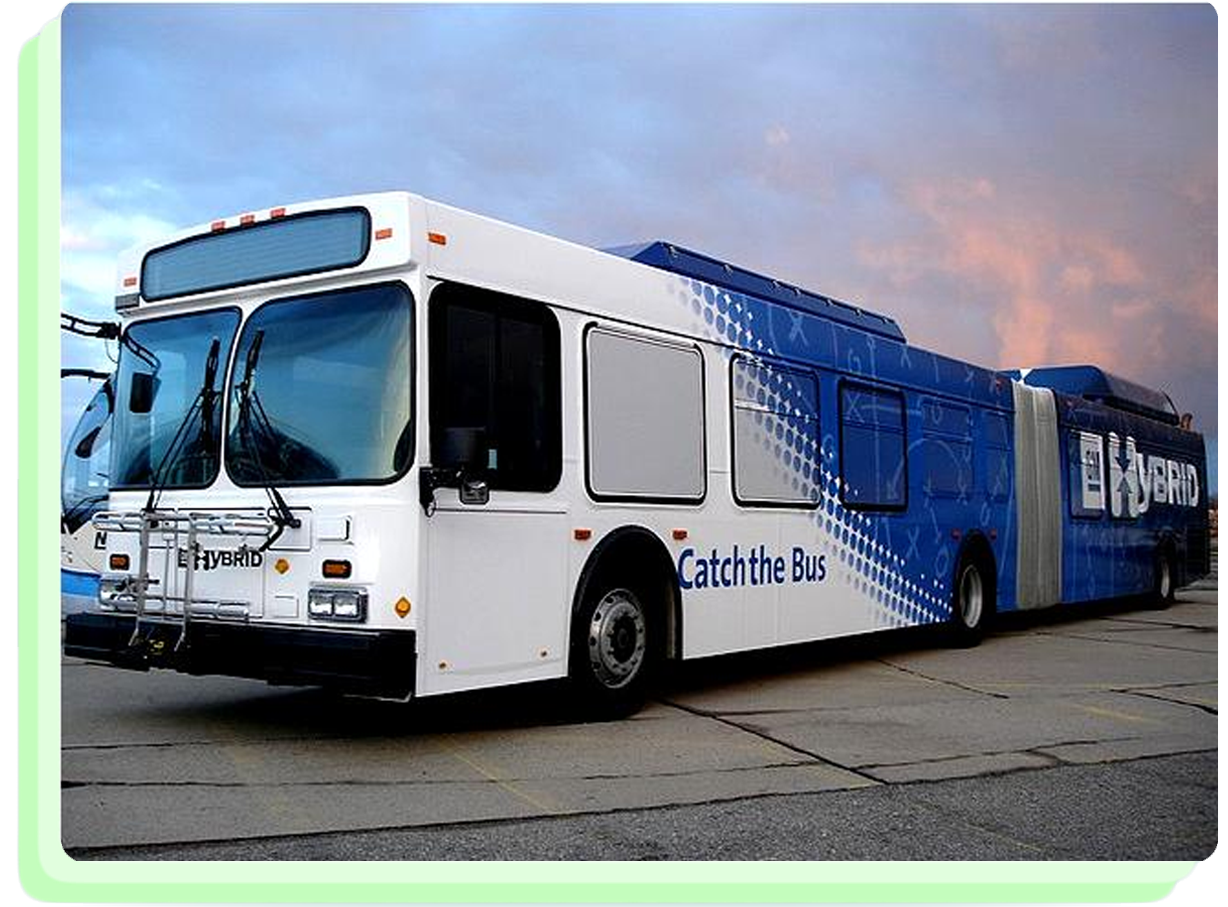
This is fairly self-explanatory. Many cities and towns have, at the very least, some sort of public bus system. Larger cities may also have a metro or light rail. Furthermore, some colleges have dedicated, free buses to get you around the campus. Educate yourself on what options are available where you live with a quick Google search, for example. Find out:
– Where you need to go. There will likely be more than one (bus) route, and it’s possible you might have to change lines to get to your final destination. Determine the closest stops to where you live and where you need to be and then see what your options are. If you have far to go, you may have to look in to long-distance options like Greyhound buses, shuttles, or trains.
– When you need to be there. Buses still have to deal with traffic but, unlike your car, you can’t control when they show up. Plan in extra time in case the bus is late or you miss a connection.
– Your budget. Public transport isn’t (usually) free. That said, it’s still usually cheaper than all the costs (fuel, maintenance, taxes, parking, etc.) associated with travelling by car. On some cases you can buy a ticket on the bus, on the spot. If you plan on using it regularly, however, it may be useful to see what methods of payment your local public transport company accepts. Some companies/organizations may offer discounts for frequent travelers or other deals, like a monthly pass.
The American Public Transport Association offers links to public transport options in every state, and even some other countries, here: Transit-Related Links
2. Walk
 Again, nothing profound here. If you can walk, do. It’s free and good for you. It improves cardiovascular health and reduces the risk of obesity. If the sun’s out, you’ll even get some natural vitamin D.
3. Bike (or skateboard/roller skate/unicycle)
Ok, so you can’t/don’t want to use mass transit, but you still need to get there quickly-ish. Grab something with wheels but no motor, then! Biking is a popular choice (and perhaps safer, since bikes generally come with more reliable brakes than skates or skateboards!), but anything will do. Hop on your ‘vehicle’ of choice and pedal your way. If you don’t have any, try checking the local Goodwill, Salvation Army, or Target, if you’re hoping to find something less than $100.

There is more inherent danger with this option as you may find yourself sharing the road with motorists. Remember these important points:
Be Safe
– Wear a helmet. Maybe you think it looks dorky, but a cracked skull looks even worse- and could be fatal. Furthermore, wearing a helmet is required by law, in many places. So get yourself a helmet and make sure it fits well.
– Don’t use earphones. It can get a bit monotonous on the road, but it’s important that you hear what is going on around you, be it a car coming up from behind that you didn’t see or someone honking/shouting for your attention. Some laws allow you to have one ear bud in, but weigh carefully your personal safety versus personal boredom.
Be visible
– Be visible. Wear bright colors. When biking at night, wear reflective materials, if you can, and:
– Use lights. Again, this is required by law in many places. You can generally pick up a pair of clip-on lights (a white headlight and a red taillight) fairly easily at a Walmart or Target, for example. In addition, make sure your bike has reflectors and a horn or bell.
Follow traffic rules
– Ride in the street. It’s generally frowned upon to use the sidewalk (unless you’re under 13, or your bike’s wheels are less than 26″ in diameter). Again, traffic regulations for non-motorized vehicles can depend on where you are. Do a quick internet search to find out what is tolerated and what isn’t where you live.
– Use the bike path. If there is a bike path or bike lane available, it’s safe, and you aren’t turning, use it. If there isn’t a path and/or there isn’t enough room for bike and car to use the lane side-by-side, you are allowed to bike in the middle of the lane. If there aren’t any safe paths available, you could go so far as to lobby your local government to increase spending on sidewalks and bike lanes.
– Ride with traffic. Go in the direction traffic is going, not against it. If you need to go the opposite direction, cross the street (at a designated crossing location) and ride with traffic there. A good rule of thumb is to behave the same way you would if you were driving a car. Being on a bike does not exempt you from the general rules of traffic, so:
– Obey traffic rules. Stop at all traffic lights and all stop signs. A lot of people seem to forget, or not know, this one. Even if no one is there, or you’re sure you could zip across fast enough that it wouldn’t bother anyone, don’t do it. Treat yourself like a very tiny, slow car. Not obeying posted traffic lights and signs is a crime, and you can be ticketed. And furthermore, you could get seriously hurt.
4. Rent a car
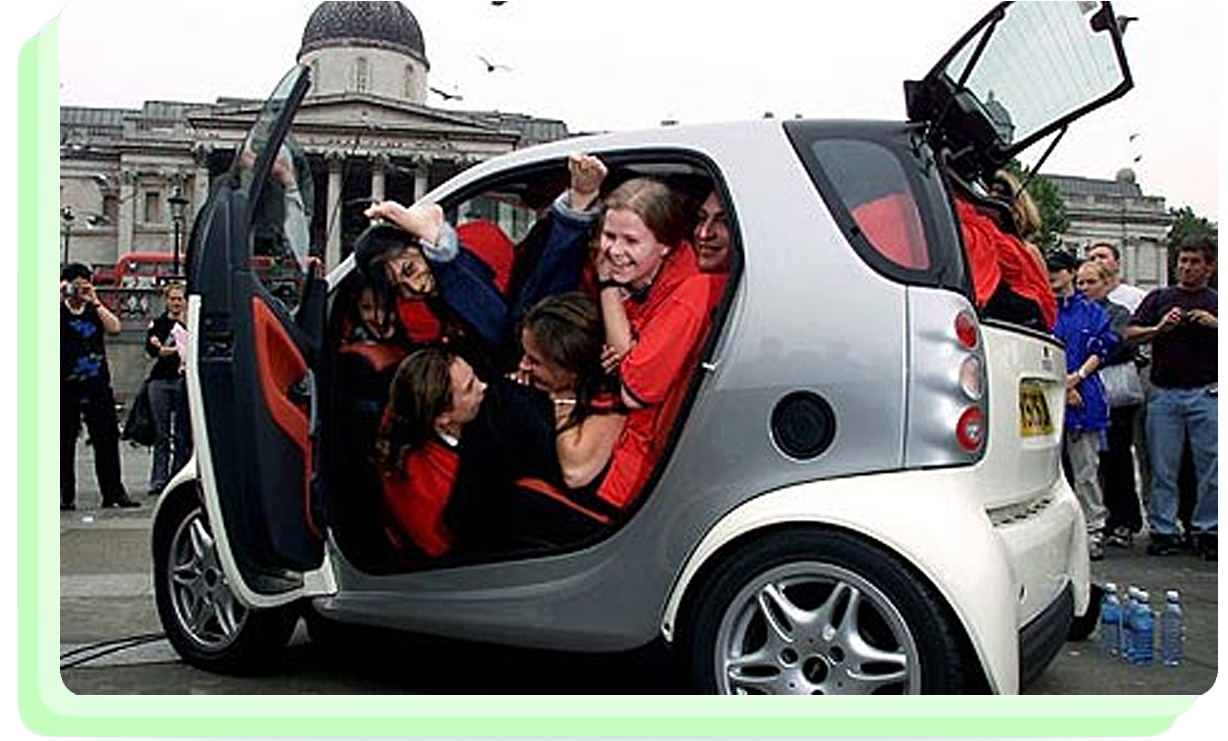 This might sound a bit counter-intuitive, what with the whole “cars = bad for the environment” thing mentioned in Part 1. However, if you are able to get around, for the most part, by other means (public transit, on foot, by bike, by carpool) and need only rent a car for short periods every now and then… renting a car from time to time is certainly a environmentally friendlier (and cheaper!) compromise than owning a car. There are a few different types of car sharing schemes out there:
– Peer to Peer. This is where the marketplace matches drivers to cars available to rent from a fleet of cars owned by the community. A few Peer to Peer groups include:
+ Whipcar
– Business to Consumer. This is when a company owns the fleet of vehicles and manages the car-sharing among members. A few car-sharing companies include:
+ Zipcar
+ StattAuto (Germany)
+ GoGet (Australia)
– Not for Profit/Co-Op. When local communities or organizations facilitate car sharing in order to try and change peoples’ driving habits rather than to make a profit. A few such organizations are:
+ City Car Share (San Francisco area, CA, USA)
+ I-GO Chicago (Chicago area, IL, USA)
Be sure to do a search of your own and see what is available in your area. Or even better, start one.
If you missed out on the previous installment, see how to get around with a car in Don’t Drive Alone – Part 1.

 Green Start